
630-584-4800

-

- Home
- Our Firm
- Divorce
- The Illinois Divorce Process
- Grounds for Divorce
- Alimony / Maintenance
- Child Custody / Parental Responsibilities
- Parenting Time
- Child Support
- The Stay at Home Parent and Divorce
- Property Division
- High Asset Divorce
- Tax Implications of Divorce
- Divorce for Older Couples
- Uncontested Divorce
- High Conflict Divorce
- Change in Venue or Jurisdiction
- Subpoenas
- Annulments
- Post Divorce Modifications
- Post Divorce Enforcement and Contempt of Court
- Workers Compensation Claims and Personal Injury Claims in Divorce Cases
- Family Law
- Criminal Defense
- Blog
- Media
- Contact

Recent Blog Posts
Is it Possible For a Parent to Abduct Their Own Child in Illinois?
 Some of the most heated disputes during an Illinois divorce are those that deal with issues concerning the children. In some cases, a parent may use the child as a way to hurt or "get back" at the other parent for whatever reason. In other cases, a parent may just be so worried about the outcome of the allocation of parenting time and parental responsibilities that they decide to take the child without the permission of the other parent before they lose them. If you believe that your child has been abducted or is at risk of being abducted by their other parent, you should speak to an Illinois family law attorney to discuss your options.
Defining Child Abduction
It can be frustrating when your child’s other parent is late to drop off the child or does not exercise their visitation rights consistently. However, in some cases, a parent may act much more irresponsibly than inconsistent drop-offs. In some cases, a parent may go so far as to even abduct the child from their other parent. In the legal context, child abduction is a rather specific act that comes with serious consequences.
How Can I Protect My Credit During My Illinois Divorce?
 Your marital status does not directly affect your credit score. However, that does not mean that it cannot affect it indirectly. It is not uncommon for a person to notice a difference in their credit score during and after a divorce because of all of the financial changes that this process brings. Having a decent credit score is important for a variety of reasons. Your credit score is how lenders determine whether or not they will do business with you. If your credit score takes a hit, you could have difficulty purchasing a vehicle or home, renting a place to live, or opening any other type of line of credit. Protecting your credit score should be a priority at any time, but especially during your divorce.
Steps to Take to Protect Your Credit
If you are planning to file for divorce, it is important that you pay attention to your finances. Your entire life is changing, and it is easy for something to slip through the cracks and harm your credit score. Here are a few things you can do to help protect your credit score during your divorce:
What Rights Do Unmarried Fathers Have in Illinois?
 Most people would agree that the bond between a parent and their child is a special, sacred one. Illinois courts have adopted this principle and use it in nearly all legal matters concerning children. When parents are unable to agree on certain issues, like parenting time or visitation, the judge will make the final decision with the intention of preserving the relationship the child has with each parent. Under Illinois law, fathers have just as much of a right to a relationship with their children as mothers do. Even though it may feel like a never-ending battle when you are an unmarried father, it is important to realize that there are ways to secure and protect your parenting rights regarding your child.
Is Your Child’s Paternity Established?
Before an unwed father can legally claim any rights to his child, he must first establish paternity of the child. In many cases, establishing paternity can be as easy as filling out and signing the Voluntary Acknowledgment of Paternity (VAP) form at the hospital when the baby is born. In cases in which the child’s paternity is contested, you may have to use other methods of confirming the child’s paternity, such as genetic testing. Either parent can request genetic testing to determine whether or not the alleged father is truly the biological father. Once you have established paternity through any legally recognized method, you can petition for rights regarding your child, such as parenting time and parental decision-making responsibilities.
Understanding Available Remedies in an Illinois Order of Protection
 Nobody ever thinks that they will become a victim of domestic violence until it happens to them. Unfortunately, domestic violence happens much more frequently than you may expect. According to the National Coalition Against Domestic Violence, more than 10 million people in the United States are victims of domestic violence each year. In 2019, there were 193,800 domestic violence calls made to the Chicago Police Department alone, along with 24,400 calls made to the Illinois Domestic Violence Hotline, according to data from The Network: Advocating Against Domestic Violence, an organization dedicated to helping victims of domestic abuse. Many victims of domestic violence never seek help, but the ones who do have options available to keep themselves and their families safe. One widely used method is petitioning for an order of protection from the abuser.
How to Prepare For Your Initial Divorce Consultation in Illinois
 Making the decision to divorce your spouse is a huge step. In many cases, making that decision takes months, if not years, to solidify and begin the process. One of the first steps in the process is to find a divorce attorney who can help you accomplish your goals in your divorce. Before you hire just any attorney, however, you would be wise to set up initial consultations with any lawyers you are considering working with. An initial consultation is a way for you to meet the attorney, ask questions, get to know your attorney, and discover how they can help you and what they can provide during your divorce. Many people getting a divorce find the process of hiring an attorney to be intimidating, but as long as you are prepared, your consultation can be a productive one.
Make Sure You Come Prepared
When you go to a divorce consultation, you are in control. You will get the most out of your divorce consultation if you bring information to the meeting. The more information you are able to bring, the more productive your consultation will be. You should try to bring basic information about your financial situation, like recent pay stubs and tax returns. If you and your spouse have a prenuptial or postnuptial agreement, you should bring that. You should also be prepared with basic information about you, your spouse, and your children, along with things like the date you were married and the date you and your spouse began your separation.
How to Practice Healthy Co-Parenting After Your Illinois Divorce
 One of the biggest concerns that many parents have during the divorce process is the effect it will have on their children. The irony of this is that the parents themselves have significant control over how their children are affected. Many people think the mere fact that parents are splitting up will be enough to permanently harm a child for life, but studies have shown that the level of conflict parents display to their children is a much more important factor when it comes to determining how much of an effect a divorce has on the children. Children whose parents are constantly in conflict suffer from more negative effects than the children of parents who get along.
Co-Parenting For Your Children’s Best Interests
With this in mind, it is important that you and your spouse keep the conflict to a minimum, especially when around the children. Co-parenting after your divorce can be complicated, especially if your divorce was less than amicable. Here are a few things you can do to help keep the conflict at bay during and after your divorce:
Dissipation of Assets in an Illinois Divorce: What You Need to Know
 Going through a marital separation is always challenging—even more so if you find out that your spouse is wasting money or property immediately prior to the divorce. The intentional or reckless waste or abuse of marital property is called the dissipation of assets, and it could be grounds for a remedy in the division of property. As you prepare for your divorce, here are the most important things you should know in order to recognize and address the dissipation of assets if necessary.
How Does Illinois Define Asset Dissipation?
In Illinois, the dissipation of marital property is broadly defined as the unreasonable or improper waste or abuse of jointly held assets for one spouse’s sole use. Under the state’s family law code, dissipation only occurs relatively shortly before a divorce petition was filed or after a divorce petition was already filed. Some specific examples of conduct that could constitute the improper dissipation of marital assets include:
When Are Expert Witnesses Used in an Illinois Family Law Case?
 If you are involved in a family law dispute—a divorce, a child custody case, a disagreement over child support, etc.—you may need to go to court to obtain a fair and just resolution. When in family court, it is essential that you are able to present a strong, well-supported case. In some circumstances, expert witness testimony may be needed. Here, our attorneys explain the important things you should know about using expert witnesses in a family law case in Illinois.
Expert Witnesses Provide Context and Clarity For Complex Matters
Witness testimony is an important form of evidence in many kinds of legal cases. In family law disputes, there are three main types of witnesses. Fact witnesses testify to a specific event they saw or a specific matter about which they have personal knowledge. Character witnesses testify to the overall disposition of the parties involved in the case. Expert witnesses are educated specialists who help bring context and clarity to a complicated matter. In family cases, an expert witness may be called to testify regarding:
When is a Qualified Domestic Relations Order Necessary in a Divorce?
 Dividing property in a divorce is never easy, particularly when it comes to complex financial assets, such as retirement benefits or a retirement account. This raises an important question: How do we divide retirement assets in a divorce? A special type of legal order known as a Qualified Domestic Relations Order (QDRO) offers a solution. In this article, our divorce lawyers provide an overview of QDROs and explain how they can be used to protect your financial interests.
Understanding the Basics of QDROs
A Qualified Domestic Relations Order is a tool that a divorcing couple can use to effectively and efficiently split up certain types of retirement assets. As described by the Internal Revenue Service (IRS), a QDRO is “a judgment, decree or order for a retirement plan” for the purposes of dividing marital assets or providing child or spousal support. The importance of a QDRO cannot be overstated. When divorcing couples in Illinois fail to get a proper Qualified Domestic Relations Order, they often face the following three problems:
When is Imputed Income Used in an Illinois Child Support Case?
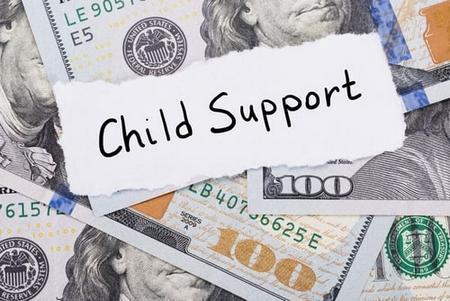 Parents have a legal responsibility to provide financial support to their children. In Illinois, child support obligations are calculated based on state guidelines that look primarily at each parent’s income. While these guidelines work well in many cases, there are exceptions. One possible exception is a case in which a parent’s actual income differs substantially from what they could be earning.
Imputed Income Explained
Whenever reasonable, the Illinois child support calculation will account for each parent’s actual income at the time when the order is established. This helps to ensure a fair and equitable result, and it often provides protection for a parent with few financial resources. However, in some cases, a parent’s actual current income is misleading given their financial resources or their ability to earn. Under these circumstances, the court may decide to use imputed or potential income in the calculation instead.

Schedule a Consultation Today
Complete the contact form below or call us at 630-584-4800 today.
630-584-4800
555 S. Randall Road, Suite 200
St. Charles, IL 60174
Follow Us


